Friday, December 15, 2023

Why Buy at Coffeehouses When People Can Make Coffee at Home?


I prefer drinking coffee at home. Do you? Except when I'm out and someone invites me for coffee. Then I prefer coffeehouses to my home, which seldom happens. I mean, not many folks invite me for coffee, not even coffee at McDonald's.

Thank God my wife does.

But why do most people opt for coffee shops, especially those in malls? Baristas are one reason, with their expertise and special coffee devices--sophisticated coffee or brew makers, drippers, grinders, shakers and milk steamers, to name some. Pinoy houses don't regularly have them in their kitchens or coffee nooks. Then there are the various coffee flavors and mixes.

I try making my version of special coffee blends using whatever tools I find in my kitchen but end up in disaster, often adding Ovaltine to the weird-tasting concoction to save the expensive ingredients. Ovaltine is a coffee saver for failed coffee experiments, that is, if sweet and creamy is okay with you. You should try it with a scoop of vanilla ice cream. A real game changer.

Other folks prefer pure, black coffee, a heavy brew concentrate. I can drink that, though I find it a little too bitter, but it's the healthiest kind of coffee. I sometimes ask for cafe Americano but often have a few spoons of steamed milk added and some brown sugar. Yeah, I usually prefer my coffee with some milk or creamer and a tiny, mini, Lilliputan, nanoscopic amount of healthy sweetener like stevia, monk fruit or yacon syrup. Well, dark brown sugar will also do if there's no other option.

Why the milk or creamer and sweetener? Pure black coffee can harm your intestinal lining eventually and also make your stomach too acidic. But this is not to say I never take my coffee black. I do, probably once or 2 times a week.

But here's the thing. I prefer drinking coffee at home because I can control the blackness, and the milk and sweetener. Second, I avoid the alluring but fat accumulating carb-and sugar-rich flavors they put in fancy coffee. Third, I easily discipline myself to having a mug a day when at home. Fourth, it's much cheaper. And fifth, I avoid crowds. I like sipping coffee alone in quiet places with Jesus. 

Originally, coffee was made and drank at home. But when man (and woman) foolishly decided to get busier and busier (and stayed out more as far away from home), coffee shops came and home-made and home-drank coffee became less interesting. More people also became overstressed, depressed and anxious when they made themselves busier and found refuge in coffee shops with friends while enjoying sweet, flavored coffee which did much to their feeling of well-being and a mysterious sense of elation (not so mysterious, actually, because it's the combined action of caffeine and sugar). 

So now you know why people go to coffee shops. 


HEALTH FOR THE PINOY SOUL 

Though I appreciate a donation, these powerful e-books are yours with or without donation. Just email me at nonjoiners@gmail.com and ask for the FREE E-books, "MY SIMPLE SECRETS TO FITNESS" and "BEAT JOB INTERVIEWERS 10 WAYS." You get an email back in about 20 seconds or less with a download link to the e-books. The email also contains my GCash number in case you want to make a donation, P100 or whatever amount you have in mind (it will help my church ministry). 

But with or without donation, the 100-plus and 50-plus page e-books are yours for FREE and will help you discover your most inner strengths and manifest them to help you with your career, relationships and life! Get the free e-books and get a surprise bonus as well. 

Sunday, October 8, 2023

Pinoy House of Prayer that Really Works


We all know it--a family that prays together stays together. Sadly, that's often the only reason why we pray--to keep the family intact, safe and prospering.

And we pass on that prayer tradition to every generation so that each generation doesn't really know what prayer is. They think it's anti bad luck.

Basically, prayer is asking God for things. That's what we've been taught. Yeah, but it's more than that. Definitely more. Prayer is regular conversation to develop a deep relationship with God. If talking is used just for asking for things, it can turn relationships sour.

First and foremost, prayer is building intimacy with God. You desperately seek to talk with HIM because you love to and you need to. You just want to be with HIM the whole day, all your life. This is the prayer we should pass on to our kids, that should mark a Pinoy home, even secure a housepinoy. 

Not just pray before meals...or when we're in dire need.

Wrong prayer traditions teach our kids to skip praying or hate it altogether. Worse if it makes them feel obligated to do so to avoid punishment, or as a way to earn God's favor if they give it their best--like a class recitation to get good grades.

No intimate relationship in these things.

Remember the first time you talked with your crush and he or she looked interested? Remember how you looked forward excitedly to have the conversation again and again, and that thought occupying your mind all day? 

Prayer should be the same.

HEALTH FOR THE PINOY SOUL


Though I appreciate a donation, this powerful e-book is yours with or without donation. Just email me at nonjoiners@gmail.com (NONJoiner is my blog) and ask for the FREE E-book, "YOUR POWER WITHIN." You get an email back in about 2 seconds or less with a download link to the e-book. 

The email also contains my GCash number in case you want to make a donation, P50 or P100 or whatever amount you have in mind (it will help my church ministry). 

But with or without donation, the 80-plus page e-book is yours for FREE and will help you discover your most inner strengths and manifest them to help you with your career, relationships and life! You also get short NON-Joiner emails.

Saturday, September 16, 2023

Why They're Nuts Over Minimalism


Do you notice the fad on having less stuff in the house? I first heard of minimalism maybe some 3 or 5 years ago and the idea was borrowed from Japan, if I remember right. Some folks are beginning to find stuffy spaces too "noisy" and suffocating not just the airways but the mind most especially. Too much stuff clogs.


The idea of minimalism first came as a trend in arts, like painting and sculpture, and was first popularized in the 1950s. The idea was to use simple, typically massive, forms. Today, Cambridge dictionary says it's "a style in art, design, and theatre that uses the smallest range of materials and colours possible, and only very simple shapes or forms."

Minimalism can go well with small dwellings in the Philippines. But as of the moment, you'd see cluttered furnishigs even in cramped housePinoys. They try to stock their homes with appliances because it's supposed to prove they're well-off. Few Pinoys appreciate having ample space in the house for free and easy movement because we see blank spaces as a sign of material lack. We think empty spaces prove how much money we have so we crowd up the house with all kinds of stuff.

Well, finally some Pinoys are seeing the practicality of it all. Some are even going nuts for it. Besides being cost effective and allows savings, minimalism is also highly maintainable and makes physical activities more possible so you have more leeway with mobility. It allows air to circulate more freely as well. But why isn't the idea really taking off in the country?

Because minimalism shouldn't just be a fad. It should be a mindset, a life principle applied not just on house designs but in all of life. It's a mindset that says only urgent needs should be possessed or consumed. It should rule your daily schedule, priorities, diet, thoughts, conversation and dealings with people. Even ministry if you're a pastor. No excesses or extras but just the exact amount you really need.

It took people centuries to realize that having a lot of things is meaningless. Japan homes have been minimalist since the beginning (though I don't know when the beginning actually was) but minimalism got attention only in our times, some centuries after. We think owning material possessions is the life. Now a growing number of us see how it sucks.

Jesus has been batting for it in the bible. He says:
Life does not consist in the abundance of possession. [Luke 12.15]

The Old Testament, too, has been urging believers about a simple life, no extras, extravagance or prodigality. Having your "daily bread" was enough.

"...give me neither poverty nor riches,
but give me only my daily bread.
Otherwise, I may have too much and disown you
and say, ‘Who is the Lord?’
Or I may become poor and steal,
and so dishonor the name of my God.” [Prov.30.7-9]

And talk about ministries. Does the church believe this? Nope. Just look at how they load up all kinds of electronic junks on their altars to make their worship sound good--not really to God but to the audience. In fact, they see you lacking favor if you have less in life and blessed if you have more. They know how Jesus lived and owned no earthly possession, emptying himself. And yet you see how churches buy massive properties to showoff and attract. Just saying.

HEALTH FOR THE PINOY SOUL 


Though I appreciate a donation, this powerful e-book is yours with or without donation. Just email me at nonjoiners@gmail.com (NONJoiner is my blog) and ask for the FREE E-book, "YOUR POWER WITHIN." You get an email back in about 2 seconds or less with a download link to the e-book. The email also contains my GCash number in case you want to make a donation, P50 or P100 or whatever amount you have in mind (it will help my church ministry). But with or without donation, the 80-plus page e-book is yours for FREE and will help you discover your most inner strengths and manifest them to help you with your career, relationships and life! You also get short NON-Joiner emails.

Tuesday, March 21, 2023

Why We Almost Don't Use Our Terrace


I've been jogging and brisk walking in the morning almost all my life (I started in grade 6 to augment my martial arts training). I often visit adjacent subdivisions and villages and the one thing I notice about houses is that a lot of them have terraces on the second floor gracing their frontage.

But no one uses them.


Well, almost no one. I see folks hanging their wet clothes on their terrace now and then, but that's it. I haven't seen people staying there for leisure or relaxation, sitting while enjoying a cup of coffee, for instance, or reading a book. Or having a nice chat with family members. I mean, I imagine that's what terraces are for. Not for doing the laundry.

Left Behind

Those terraces are a total waste. And why won't most Pinoys use them? We think it's too melodramatic, too histrionical. Masyadong OA ba. We begin to put value on privacy when it comes to the use of front terraces. We don't want to be seen there by the neighborhood. It's almost like a scandal. So, why have them on our facades at all? Because it's nice to have terraces or balconies. They make our houses look more interesting and expensive, maybe?

It explains why people troop to the malls during sale day causing huge traffic. Vanity. We buy a lot of things we do not need or use. We just want to have them, period. They make us look moneyed and we hate being left behind by the fad. It's like wearing black, leather jacket at noontime in Manila during summer.

Or putting on tattoo. Or smoke or vape. 

We Fear Terraces

Anyway, back to terraces. I love terraces and doubly love using them because I want to see what's way over there in the distance. I wonder what folks there are doing or what they're chatting about. When I watch distant houses or buildings from a terrace, I imagine stories of people living there. I try to create scenes and sagas. I release my mind and let it roam free.

And I guess that's why we fear being alone in terraces. We fear real freedom. We'd rather have freedom in company with other people and dread being seen enjoying freedom alone--because that makes us look different. Eerily different. That fear makes us weak inside.

HEALTH FOR THE PINOY SOUL


Though I appreciate a donation, this powerful e-book is yours with or without donation. Just email me at nonjoiners@gmail.com (NONJoiner is my blog) and ask for the FREE E-book, "YOUR POWER WITHIN." You get an email back in about 20 seconds or less with a download link to the e-book. The email also contains my GCash number in case you want to make a donation, P50 or P100 or whatever amount you have in mind (it will help my church ministry). 

But with or without donation, the 80-plus page e-book is yours for FREE and will help you discover your most inner strengths and manifest them to help you with your career, relationships and life! You also get short NON-Joiner emails.

Thursday, June 17, 2021

Should You Have a Loft?


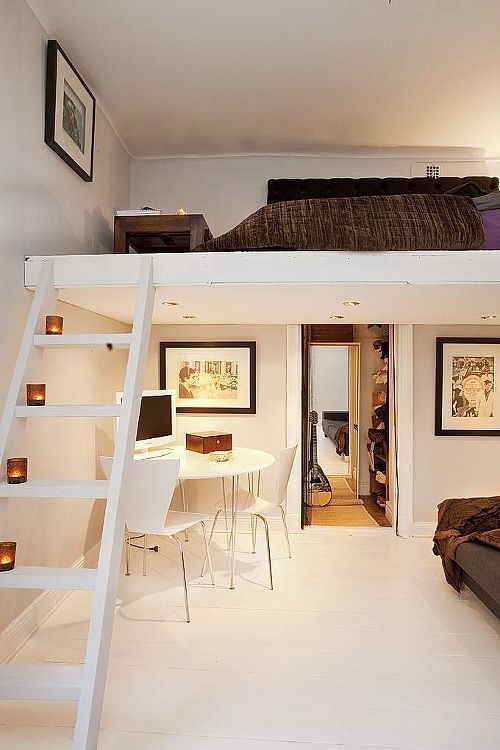
Lofts are fast becoming a fad in Philippine interior design. They look good and flashy but do we really need them? Is the idea practical in Filipino homes? Does it have a predecessor in our architectural past to have it fit right into our modern local architecture? Well, let's see.

Photo above by Aaron Huber on Unsplash.

Native Philippine houses had spaces underneath for storage that folks called "Silong." Not really a loft concept but it birthed the idea of having extra small space in the house for storage. But aside from that, some farm houses actually had overhead ledges or an upper extra half floor built into them where farmers kept farm implements and some harvest produce saved for a rainy day or an emergency. They preferred this to the silong under the kubo where supplies could be easily stolen by robbers at night, eaten by rodents or damaged by floods.

So they built lofts that looked something like the one below (but not exactly). It may look like an attic but attics are a totally different story. Attics are built right into the ceiling of the roof often occupying the whole roof area while lofts are simply extra half floors (or smaller) inserted between the ground floor and the ceiling. More like a small mezzanine but still different from it. And, like in the picture below, crops or palay stalks are kept in them for easy access right inside the house instead of going out to the barn to get them.

Photo by Skitterphoto: pexels.com

Mezzanines are different. They're often part of the living room (or lobby when talking of buildings) as an added area for extra furnishings and also for receiving guests. Lofts are definitely smaller, often housing only a sleeping quarter or any similar cubicle and usually placed above rooms, like the dining, kitchen or bedroom. And lofts are served by a simple, inclined or upright ladder going up, while mezzanines are served by staircases, not ladders.

So, lofts are not a total stranger to Pinoys, especially farmers. We can safely say that it's been part of Filipino architecture.

Ceiling

We see that in our country, it's practical. But there are certain considerations. Like ceiling height, which is crucial in lofts. It's not practical for houses with flat roofs or low ceilings which is often the case in middle class subdivisions. It's going to be too hot if its too close to the ceiling and standing up won't be comfortable if your head touches the ceiling. Ceiling clearance from ground floor to loft floor level, and loft floor to roof ceiling, should be carefully estimated. There should be enough head clearance. 

My suggestion is a 3-meter clearance in both levels--ground floor to loft and loft to roof ceiling. Or probably 2.80 meters. There should be good ventilation, preferably good air-con system or at least install functional ceiling fans to keep loft temp cool. I'd place good-size windows as an alternative to save on electricity. 

My dream is to have my office cubicle loft (with small area for a bookshelf and desk as study nook) above my sunken living or kitchen. Perhaps go down 4 steps to the ground level so loft height and total ceiling height won't be too high. The loft will increase living room height and afford more free air movement and make the area cooler due to the higher ceiling, something like in the picture below. From the loft it will be easier to see who's just come into the living room.

Photo by Clay Banks on Unsplash.


Privacy

Often, the concern with lofts is privacy. You're too exposed to guests in the living room or kitchen if you put the loft over it. Don't put your bed on the loft then. This is why I prefer having a mini office on my loft if I were to build one. Not a bedroom. And the fact that it's up the living area gives you enough privacy, but not make you too secluded from the rest of the house. If you were like me, I need to see what's going on in my house while doing my work on my loft. 

And I'd love the smell of good food cooking while reading my books or doing my blogs. Something like the one below. Like in the picture above.

Or place the loft inside your bedroom for an extra space, for your king-size bed and closet for instance, so your main bedroom below would have more room for other furnishings, like a small ref and coffee maker nook, or small bar, and even a large bathroom. You get all the privacy you need plus the convenience of a spacious but space-saving quarters.


Friday, September 12, 2014

Storm-Surge Ready Dwellings

Project designs by Arch Marvin Mijares.
To inquire or contact him, please use the Contact Form
on the sidebar.
Storm surge in Metro Manila? In coastal towns probably but not in the middle of this metropolis. Right? In cities near the bay probably, like Navotas and Malabon, but not in Quezon City or Makati. But we forget that once upon a time, Marikina was severely hit by deadly floods during Ondoy--and Marikina is far from any sea or bay.

The Philippines is an archipelago, and as such, being surrounded by large bodies of water, it's not hard to imagine how even its central plains lying far from bodies of water are prone to storm surges. Crisscrossing the central plains are rivers and creeks which can swell incredibly in extreme rains and drown entire towns, districts and even cities, catching us all by surprise.

Multi-Level Dwellings

In light of recent catastrophic events affecting even inland cities, it is high time to seriously consider storm-surge factors in building design. Preventive measures are always lots better than remedial measures. Let's not wait till it's too late. Often, safety measures are formulated only when mass destruction and death have occurred. Before the worse happens to you, your family or your property assets, re-think about the structure of your residence.

Multi-level dwellings are highly recommended to render dwellings storm-surge ready. Two to three level houses--better if 4 floors or 3 with a rooftop--provide escape to higher levels easily possible during a rapid storm surge. Occupants can seek quick refuge on the upper floors while buying time for rescue to arrive in time. Take one residential area right in the middle of Quezon City, for instance--Parkway Village.

During Ondoy, the residents were too confident that no flood of incredible proportions would hit them. After all, they were in the inner land where no huge body of water was close by. But the unimaginable happened. At 10 am, flood waters suddenly rose from the streets at a very rapid pace, taking only a few seconds before the ground floors of residences were submerged under water.

Soon, the waters were reaching the second floors, and then the roof tops--all within minutes. One-storey residences didn't stand a chance. When we inspected the area after the typhoon, the most horrifying stories were from residences with one-storey height.

As relevant today in construction design as seismic analysis is, should be storm-surge consideration. And the best option here is multi-level houses which are storm-surge ready dwellings, without compromising aesthetics and economics.

The multi-level residences above were done by our friend Arch Marvin Mijares. For similar designs and construction or price estimates, please use the Contact Form on the sidebar.

Friday, September 5, 2014

A Modern Concept of Shelter

House designs by Arch Marvin Mijares.
A concept of shelter today is protection, derived from the root word "shell." Before anything else, residences as shelters should provide safety and protection, not just posh design. First of all, there are the elements to protect inhabitants from, like sunlight, rain, wind, storm, and pollution, to name some. Second, protection from criminal elements. Third, privacy protection. And fourth, protection from social discrimination. Complete aesthetics, after all, is protected beauty.

Protection from the Elements

The Philippines, being along the equator, is a frequent path of tropical depressions and storms, and more recently, super typhoons. Moreover, being in the tropics, we are often hit by severe sunlight plus dryness in summer which often result to drought. In addition, recently we saw how severe flooding and earthquake can likewise devastate structures  Architectural shelter design should then give allowances for these factors to provide a concept of shelter.

Protection from Criminality

Houses, big and small, should consider criminality factor in design. And we should bear in mind that the bigger and more attractive the design, the more prone it is to criminality--robbery, intrusion, kidnapping, abduction, hostage-taking, and the like. This is not anymore something outrageously unlikely in our times. These things happen and building planning have a hand in their prevention. Aside from securing openings with sturdy covers, locks, and decorative steel grills, planners should also start considering "inhabitant orientation."

You want a video presentation like this? Please contact us!

Inhabitant orientation is the system of positioning inhabitants inside a structure in such a way that they find themselves often facing approaches and accesses to where they are instead of having their backs on them. For instance, residents washing dishes in the kitchen or washing clothes in the laundry area should always have a good view of people coming into their area instead of having their backs turned and not knowing what's happening behind them.

Privacy Protection

Inhabitants should always feel secure and safe from public view or scrutiny when doing something of utmost private in nature. Walls, roofs, and closing options on openings should take care of this need, as well as CCTV cams and hidden security gadgets, which can also help secure residents from criminal elements.

Social Discrimination

Finally, a concept of shelter in the modern sense should also talk about creating an apt or relevant design quality for the shelter that makes its inhabitants safe from social prejudice or ostracism. A house or office design incongruous to the context of its neighborhood will expose its inhabitants to possible criticism and banishment. Thus, shelter should be presentable enough to the community it belongs to.

To have your house or office designed aptly and relevantly to its immediate milieu and to the times, inside and out, consult our friend Arch Marvin Mijares using the Contact Form on the sidebar. Please see his projects via the video above, which is also a sample of the video service we offer for your special events.

Here's How Your House Can be Kept Cool this El Niño Season

Since they've been scaring us about the harsh effects of the El Niño season, let's take a peep at how we can keep our homes cool, es...